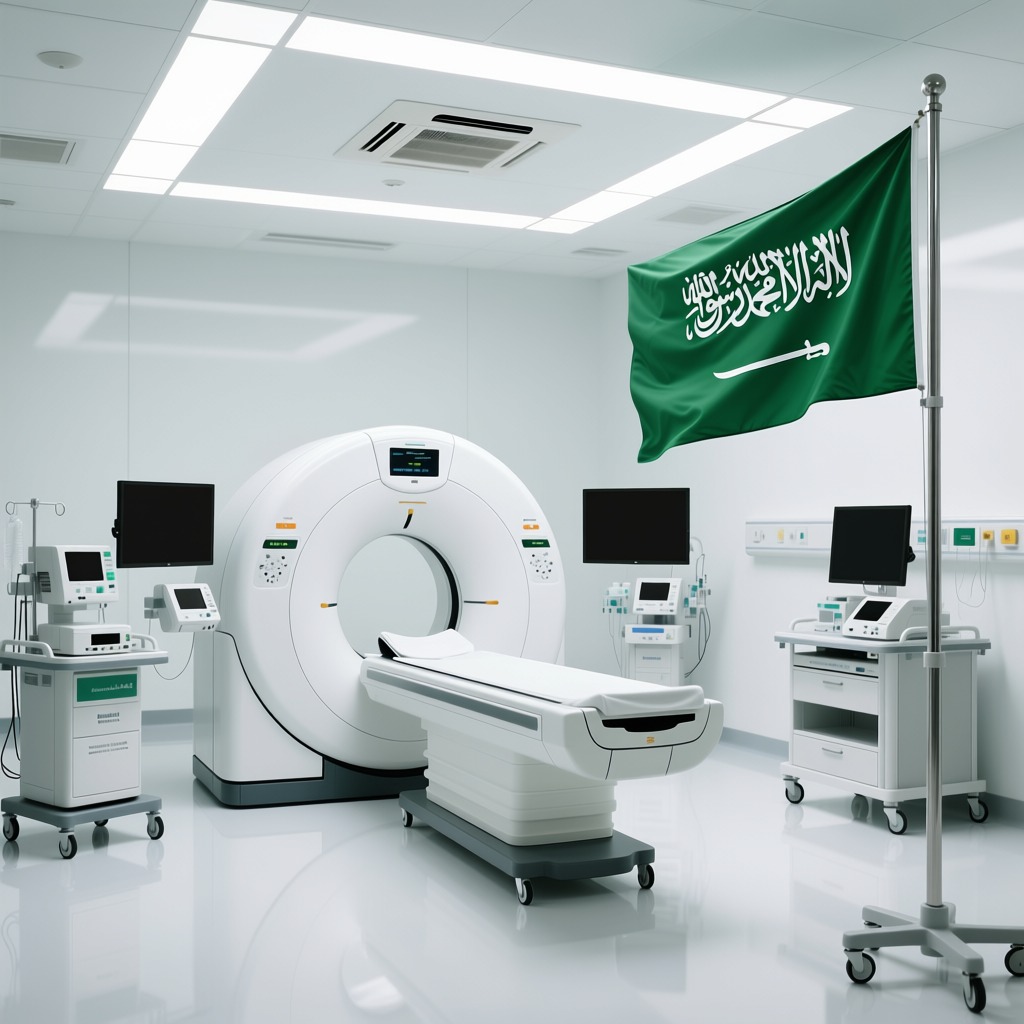

The emergency department is the most time-sensitive environment in healthcare. Decisions are made in seconds, and even a small mistake can multiply risks. Therefore, preparing an emergency department is not just about buying devices—it’s about building a precise system managed down to the details. In this article, we will cover the key steps for preparing an emergency department to ensure optimal performance, from selecting the right devices, ensuring compatibility with original accessories, to training the team on effective operation and emergency procedures.
How to prepare an emergency department efficiently?
1. Identify essential devices
Choosing devices is not random; it is a systematic decision starting with analyzing workload (daily cases, severity, peak times), the team composition, department space, and the patient pathway from entry to delivery to the relevant specialty. At the heart of this system are two main devices: the defibrillator and the portable monitor, alongside other supporting devices that are equally important.
a) Defibrillator
A defibrillator restores the heart rhythm during fibrillation or cardiac arrest. When choosing one, consider four detailed points:
- Immediate readiness: A short start-up time and clear interface are crucial; large buttons, on-screen instructions, and options for automatic/manual shocks.
- Operating modes: An automatic mode (AED) for voice-guided shocks, and a manual mode for the doctor with adjustable biphasic waves for adults and children.
- Documentation and connectivity: Ability to record resuscitation data (shock time, energy used, rhythm readings) and export it to the hospital information system or save it for review and quality improvement.
- Durability and reliability: Shock-resistant structure, long-lasting battery, and proactive maintenance indicators to warn before performance drops. These details prevent surprises during peak moments.
b) Portable monitor
The portable monitor follows the patient from the emergency entrance to the resuscitation room and is essential for continuous monitoring. To ensure optimal performance:
- Choose a clear screen showing vital information (ECG, non-invasive/invasive blood pressure if needed, SpO₂, respiratory rate, and body temperature).
- Ensure measurement stability during movement, as patient transfers, repositioning, or urgent procedures are inevitable.
- Check compatibility with other devices (printers, archiving systems, charging stations). A strong battery with charge indicators prevents interruptions.
- Provide multiple sizes (portable/bedside) to cover resuscitation rooms, triage areas, and ambulances if part of the facility.
c) Supporting devices to complete the system
- Airway devices: Medical suction units with adjustable suction levels, intubation tools, and masks with one-way valves.
- Respiratory support: Portable ventilators with basic ventilation options, and bag-valve masks (BVM) with compatible connectors.
- Infusion pumps and IV fluids: For precise drug dosing, with smart alarms to prevent blockage or dosing errors.
- Integrated resuscitation equipment: Well-organized crash carts following the procedure sequence, with security locks and seal counters to track opening and restocking.
d) Infrastructure
Preparation is incomplete without supportive infrastructure:
- Sufficient and labeled power outlets, backed by a generator and UPS to ensure defibrillator and portable monitor work without interruption.
- An asset tracking system to locate each device and monitor its status (ready/in maintenance).
- Infection control plans with quickly cleanable surfaces and single-use accessories where needed. These quiet details ensure continuity.
2. Compatibility with accessories
The wrong accessory can cancel out the effectiveness of the right device. Make original accessories the core of your purchasing and operating policy.
a) Use original accessories
Using original accessories is essential to maintain the efficiency and safety of medical devices because they ensure:
- Performance safety: Original defibrillator pads ensure proper contact resistance and consistent energy distribution; alternatives may increase resistance and reduce shock effectiveness.
- Measurement accuracy: Original SpO₂ and ECG sensors are programmed to provide stable readings despite motion, sweat, or cold.
- Warranty and reduced malfunctions: Non-original use can void the warranty and increase intermittent faults that waste time.
- Cost-effectiveness over the device lifecycle: What seems cheaper initially becomes more expensive with repeated faults and lost clinical time.
b) Inventory management and standardization
- Standardize models within the department to reduce accessory variety and simplify training.
- Create checklists for each room specifying minimum pads, spare batteries, extra sensors, and intubation kits.
- Use color coding/barcodes for expiration dates and device compatibility, with weekly inventory checks.
- Secure an approved alternative supplier for the same original accessories to avoid supply disruption.
c) Practical examples of compatibility
- Defibrillator pads: Sets for adults and children, compatible connectors, and clear expiration indicators.
- Portable monitor sensors: ECG electrodes in multiple sizes for sensitive skin, SpO₂ sensors with secure fit, and blood pressure cuffs covering all ages from newborns to adults.
- Original batteries and chargers: Rotation schedules to test capacity and centralized charging stations showing status.
- Airway accessories: Filters, connectors, and adapters in standard measurements; even minor mismatches can cause leaks and reduce ventilation.
3. Training after installation
A ready device with the correct accessory is only half the equation. The other half is a trained person who knows what to do, when, and how to document it. Steps include team training on optimal device operation after installation, operational qualification, regular simulations, and preventive maintenance.
a) Structured operational training program
- Includes a Go-Live session introducing staff to defibrillator buttons, energy selection, rapid pad changes, and activating automatic mode.
- Simulations on the portable monitor handle false signals, loss of readings, and reattaching sensors under pressure.
- Follow standardized protocols to assign roles (who declares resuscitation, prepares drugs, reads indicators) to ensure clarity and avoid chaos.
- Focus on smart documentation using automated or semi-automated logs for resuscitation events, easing later review and performance improvement.
b) Regular simulations and performance indicators
- Conduct high- or medium-fidelity simulations monthly or quarterly, including scenarios like sudden power failure, sensor malfunction, or unexpected patient surges.
- Measure performance using indicators like time to first shock, time to first blood pressure reading, adherence to readiness checklists, and resolved malfunctions within agreed service levels (SLA).
- Promote a non-punitive culture to encourage learning, with brief debriefs after major resuscitations to enhance team experience.
c) Preventive maintenance and support pathways
- Preventive maintenance plans are updated according to working hours, shock counts, and charge cycles, with weekly self-tests of defibrillators and monitors, and electronic recording of results and alerts.
- Supplier support includes hotlines, fast spare parts, and temporary loaner devices for critical cases.
- Knowledge refreshers occur with any software update or accessory model change to ensure ongoing compatibility and performance.
When we view the emergency department as a system, success relies on three integrated layers: selecting the right essential devices (primarily the defibrillator and portable monitor), securing compatible original accessories, and post-installation training to turn technical potential into effective clinical response. Managed with a “details-first” approach, readiness becomes daily practice, not just a paper goal.
Are you ready to elevate emergency readiness in your facility to meet lifesaving standards? Get reliable devices, compatible original accessories, and a practical training program that maximizes every second. Request an emergency equipment quote now and let us help you build a system ready when every second counts.